
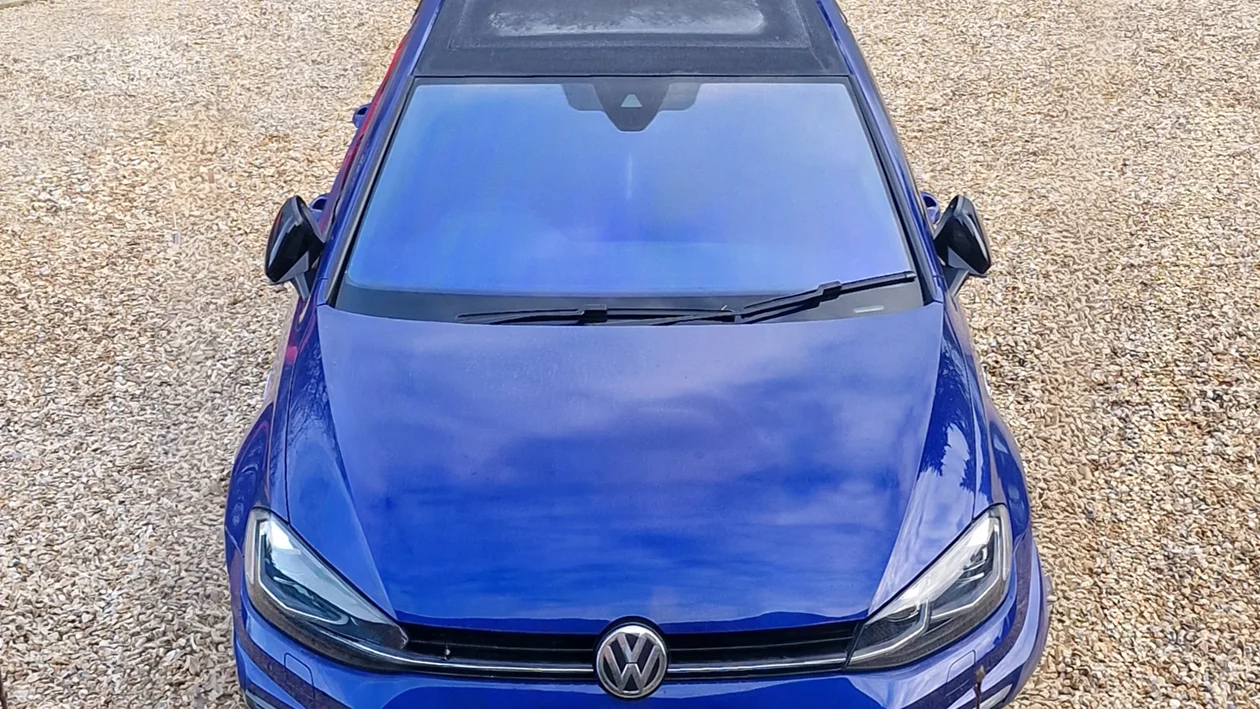
If you’re considering chameleon tint for your car, you’ve probably already noticed the stunning colour-shift effect on vehicles around town. That purple-to-blue shimmer looks incredible, but before you book an installation, you need to know exactly where you stand with Australian road laws.
This guide cuts through the confusion. We’ll cover what’s actually legal in your state, whether you can see properly at night, and whether the premium price tag is genuinely worth it.
Pre-Purchase Checklist: Is Your Car Compatible?
Don’t spend money until you check these 3 things:
- Check Your Glass Stamp: Look for “AS1” or “Transp. 70% min” on your window corner. If your factory glass is already at the limit, adding any film makes it illegal.
- The Sunglasses Test: If you wear polarised sunglasses, some chameleon tints create a “rainbow effect” that distorts vision. Test a sample piece first.
- GPS/Tag Location: High-end chameleon tints contain metal particles. Identify where you’ll mount your E-Tag or toll pass (often needs a cut-out) to avoid signal blocking.
What Is the Point of Chameleon Tint?
The point of chameleon tint is to combine the high heat-rejection properties of ceramic film with a dynamic aesthetic that changes colour (usually blue to purple) depending on lighting and viewing angles. Unlike standard dark tint, it offers privacy and style without significantly reducing visibility from the inside.
Most chameleon films use a multi-layered nano-ceramic construction that reflects infrared heat while allowing visible light through. The colour-shift effect comes from light refraction, not dye, which means it won’t fade or turn purple like cheap tints from the early 2000s.
Popular Colour Options:
- Cadbury Purple: Deep purple shift with high privacy
- Sunset Red: Orange/red shift for an aggressive look
- Azure Blue: Subtle blue that maintains an OEM style (usually 80% VLT)
Is Chameleon Tint Legal in Australia?
Chameleon tint is legal in Australia provided the Net VLT (Visible Light Transmission) meets state regulations, typically 35% for front side windows. However, applying full chameleon tint to the windscreen is generally illegal in most states (like QLD and NSW) if it drops VLT below 70–75% or alters the colour of traffic lights.
The key word here is “net.” Your final VLT isn’t just about the film—it’s the combined result of your factory glass plus the tint film.
What’s the Darkest Legal Tint in Australia?
| Window Position | QLD | NSW | VIC | Rule of Thumb |
|---|---|---|---|---|
| Windscreen | Top 10% strip only | Top 10% strip only | Top 10% strip only | Full windscreen film is a grey area —often defected if under 70% VLT |
| Front Side Windows | 35% VLT minimum | 35% VLT minimum | 35% VLT minimum | This is where most chameleon installations go |
| Rear Side Windows | 35% (passenger vehicles) | 35% (passenger vehicles) | Any darkness | Commercial/goods vans have more flexibility in some states |
| Rear Windscreen | Any darkness | Any darkness | Any darkness | Go as dark as you like here |
For more details on the darkest legal tints in NSW check out our guide.
Can I Put Chameleon Tint on My Windscreen?
Technically, you can apply film if it maintains greater than 70% light transmission, but this is difficult to achieve because factory windscreens are already slightly tinted. If the combined result is darker than 70%, it’s unroadworthy and can result in a defect notice.
The “Net VLT” Calculator:
Use this formula before committing:
(Factory Glass VLT) × (Film VLT) = Your Legal Result
Example: 75% (Glass) × 80% (Chameleon Film) = 60% Net VLT
That 60% result is illegal on a windscreen in every Australian state. Even “clear” chameleon films rarely work on windscreens because of this multiplication effect.
Can You See Through Chameleon Tint at Night?
Yes, you can see clearly through chameleon tint at night. Because most chameleon films use a high VLT (70–80%), they let in significantly more light than standard “limo” tints (5–20%), making them safer for night driving while still reducing headlight glare.
This is actually one of chameleon tint’s biggest advantages. You get the head-turning appearance during the day without sacrificing safety when the sun goes down.
Is It Hard to See at Night with 50% Windshield Tint?
Yes, 50% tint on a windshield significantly reduces night vision and is dangerous. In unlit areas, it can hide pedestrians and obstacles. For safety and legality, stick to 70% VLT or higher on any forward-facing glass.
The difference is dramatic. Through 35% standard tint, a pedestrian in dark clothing might be invisible until you’re 20 metres away. Through 80% chameleon tint, you’ll spot them at normal distances while still enjoying reduced glare from oncoming headlights.
Is Chameleon Tint Worth It?
Chameleon tint is worth the investment if you prioritise unique aesthetics and high heat rejection (IRR). However, if you only want heat reduction without the “flashy” look, a standard clear ceramic tint is often cheaper and less likely to attract police attention.
Your decision comes down to priorities. Here’s how chameleon stacks up against standard ceramic:
| Criteria | Ceramic Tint | Chameleon Tint |
|---|---|---|
| Heat Rejection | Excellent (up to 60% IRR) | Excellent (up to 65% IRR) |
| Glare Reduction | Good | Very Good |
| Privacy | Moderate | High (colour obscures interior) |
| Police Attention | Low | Higher (stands out) |
| Price | $$ | $$$ |
What Are the Disadvantages of Chameleon Tint?
Before you commit, consider these drawbacks:
- Police Magnet: The colour-shift effect stands out, leading to more frequent stops and defect checks, especially in QLD
- Cost: Expect to pay roughly 20–30% more than standard ceramic tint
- Signal Blocking: Some metallic variants interfere with phone reception, GPS accuracy, and toll tag readers
- Installation Difficulty: Chameleon film is harder to shrink and shape around curved glass, resulting in higher installation failure rates with inexperienced fitters
How Much Does Chameleon Tint Cost in Australia?
In Australia, a professional chameleon tint installation typically costs between $400 and $600 for a windscreen strip or front windows only, and $700 to $1,200 for a full car, depending on the vehicle size and film brand.
Larger vehicles like utes and SUVs sit at the higher end. Sedans and hatchbacks are generally more affordable due to smaller glass surface areas.
The Bottom Line
Chameleon tint delivers a genuinely unique look that standard window film can’t match. When installed correctly with a high-VLT ceramic film, it’s completely legal on your side and rear windows and won’t compromise your night driving.
Just remember: that windscreen is almost always off-limits for full coverage, no matter what the installer tells you. Stick to a visor strip up top, and save the colour-shift drama for your side glass where you can enjoy it legally.