Tesla Window Tinting
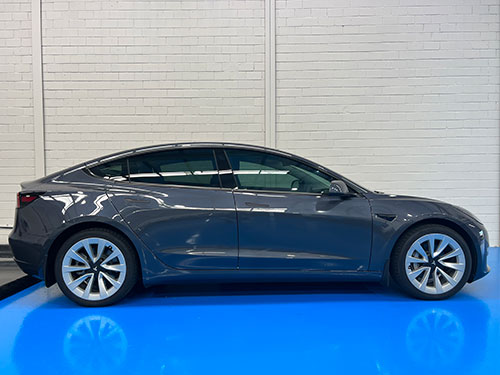
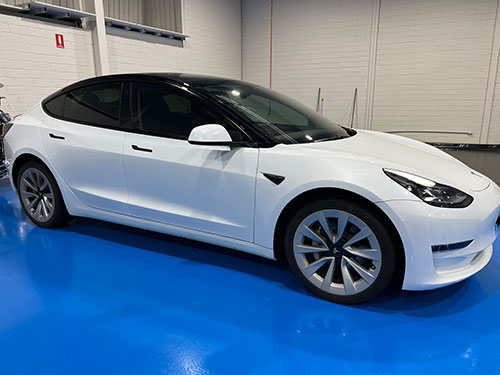
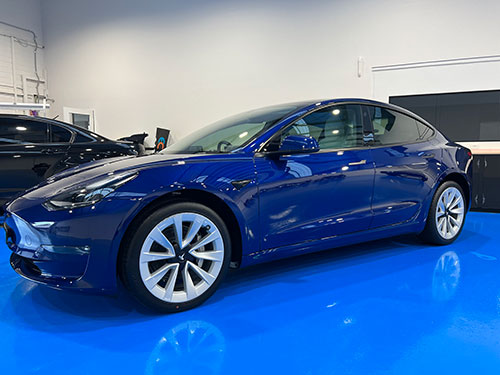
EverClear Window Tinting tints every Tesla model, including the Model 3, Model S, Model X and Model Y, from our state-of-the-art workshop in Castle Hill, servicing drivers right across the Hills District and greater Sydney. We fit premium XPEL window film that blocks up to 96% of infrared heat, more than 99% of UV and up to 92% of glare, all backed by a lifetime manufacturer replacement warranty.
or give us a call on (02) 9639 5555

150+ Five Star Reviews
Castle Hill’s Highest Rated Window Tinting Specialists
Why choose EverClear for your Tesla
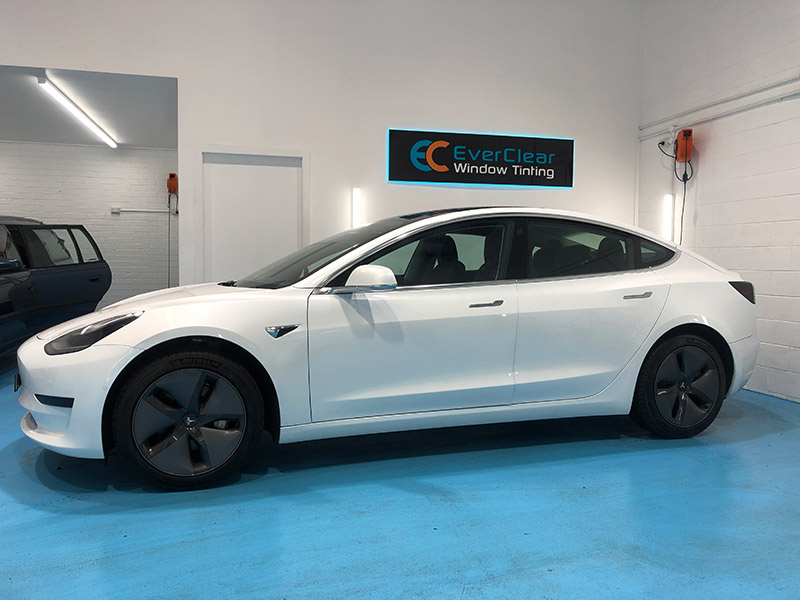
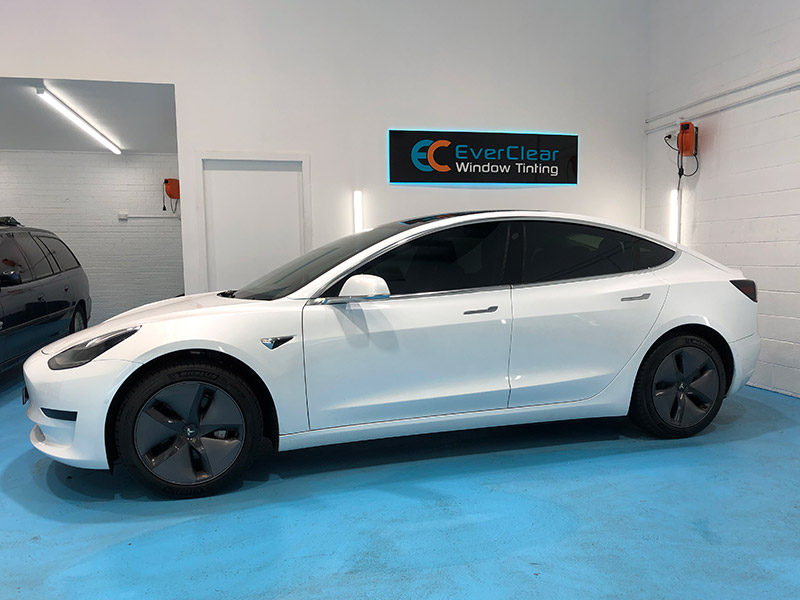
Slide left or right to see Before and After
EverClear is one of Sydney’s most trusted Tesla window tinting specialists, working from a permanent Castle Hill workshop rather than a mobile van, which gives us the controlled, dust-free environment that a flawless Tesla finish needs. We are an authorised XPEL dealer, a member of the Window Film Association of Australia and New Zealand (WFAANZ) and a Gtechniq accredited installer, and we hold 150+ five-star Google reviews from local drivers.
What you get when you bring your Tesla to us:
- Experienced installers, including Kyle and Tim, who tint Teslas week in and week out
- Genuine XPEL PRIME film with a lifetime manufacturer replacement warranty
- Up to 96% infrared heat rejection, more than 99% UV protection and up to 92% glare reduction
- A comfortable waiting area with complimentary tea, coffee and TV if you prefer to stay while we work
- Free, no-obligation quotes on every model




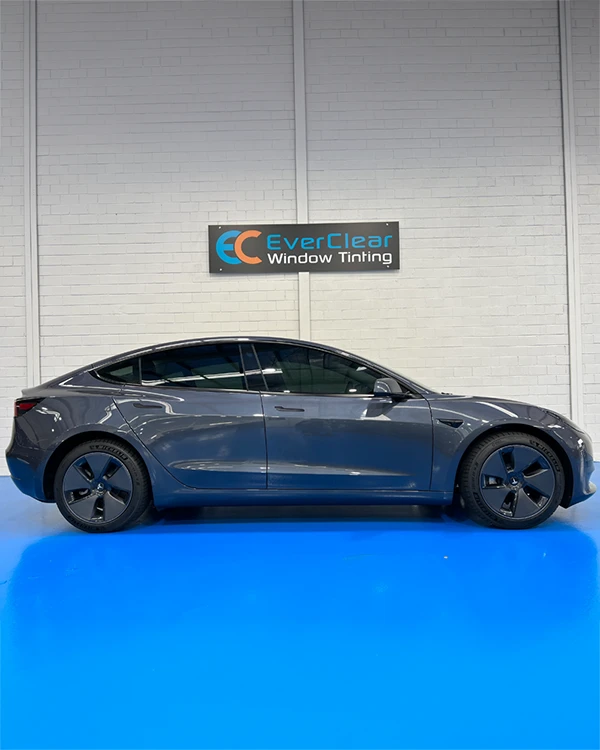
What makes tinting a Tesla different
Teslas are harder to tint well than most cars because their frameless windows have exposed glass edges and drop down about an inch every time a door opens. There is no door frame to hide or protect the film edge, so the film has to be cut precisely. We make sure the film runs far enough below the door trim and rubber that it does not catch as the window drops, but not so far that the edge begins to lift and peel over time. Getting this wrong is the most common reason a Tesla tint fails early, and it is exactly the kind of detail our installers handle every day.
This is also why tinting a Tesla often costs a little more than a standard sedan. There is more glass to cover and the frameless edges demand more careful cutting, and many owners also add external film to the large panoramic glass roof, which is a separate job again.
Tesla glass roof tinting
The panoramic glass roof on a Tesla Model 3 and Model Y should not be treated with traditional interior window film. Because the roof is a flat surface it absorbs far more heat than a vertical window, and interior film on a glass roof has been known to cause overheating and, with rapid temperature changes, can crack the glass. For that reason no Australian window tint manufacturer warrants film on a glass roof, and the same applies to any car with a sunroof or glass roof, not just a Tesla.
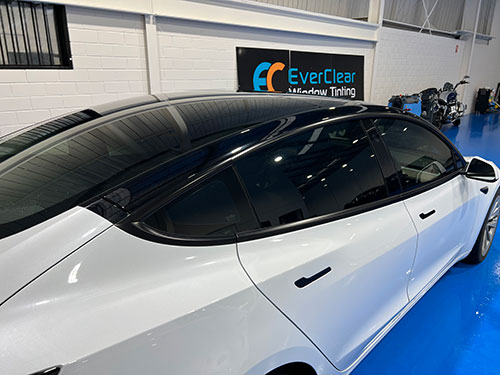
Instead, we fit a purpose-made paint protection film (PPF) to the outside of the roof glass. EverClear uses the Terminax Sunroof X-Shade film, which reflects heat away before the glass has a chance to overheat. Being a flexible PPF, it also expands and contracts with the glass, so the sudden temperature changes that crack interior film are far less of an issue. It is the right way to cut the heat coming through the roof and protect you from the sun overhead, as one of our Model 3 customers found after having the exterior roof film fitted.
The factory glass roof has a coating that blocks some heat and UV, but plenty still comes through on a hot Sydney day, which is why many owners add the external film. Because it is an external PPF product rather than window tint, it is quoted separately per job based on the size of the roof glass, and the Model Y roof is considerably larger than the Model 3’s. If you would like the roof done at the same time as your windows it adds to your appointment, so let us know when you book. You can read more about tinting the outside of car glass in our guide.
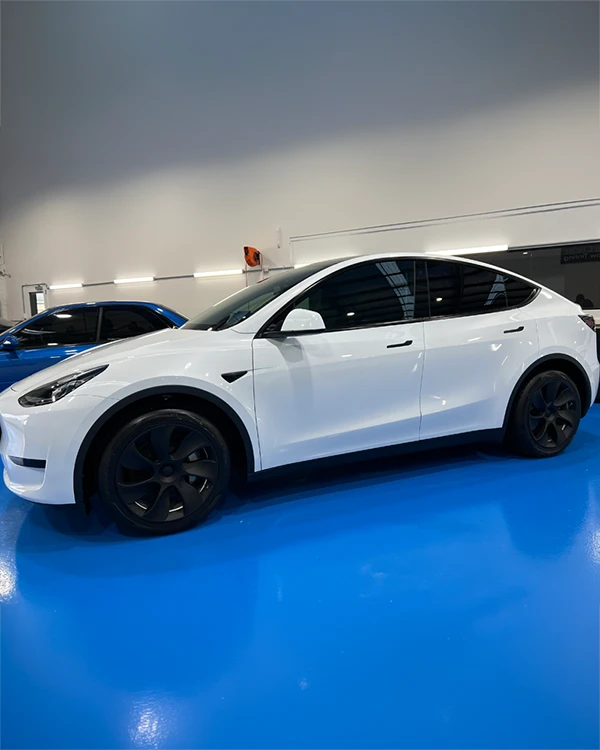
How we tint your Tesla, step by step
How much does it cost to tint a Tesla?
Tesla window tinting at EverClear costs between $395 and $895 for the side windows and rear glass, depending on the film you choose. On a Model Y that covers the side windows and rear tailgate, and on a Model 3 the side windows and the lower section of the rear window. Because the Model 3 rear window is so large, having the whole window done as a single piece needs an oversized film and costs more, depending on the option you choose. A carbon film sits at the lower end of the range and premium XPEL ceramic at the upper end. Tesla itself does not offer aftermarket window tinting in Australia, so for anything beyond the factory glass you go to an independent specialist like us.
Tinting the glass roof is priced separately, because it uses an external PPF film rather than window tint (see above), and is quoted per job based on the size of the roof glass. For a fuller breakdown of what drives the price, see our guide to window tinting costs.
Choosing your tint shade and staying legal in NSW
In NSW, your front side windows (the driver and front passenger windows) must let through at least 35% of light, so 35% VLT is the darkest legal tint for the front of any Tesla. The windows behind the driver can legally go darker, down to 20% VLT, because the law treats the rear of the car differently. These rules come from Transport for NSW under the Light Vehicle Standards Rules (Rule 44), and they apply to your Tesla as a standard passenger vehicle.
VLT means Visible Light Transmission, so a higher number is lighter and a lower number is darker. A 20% tint is darker than a 35% tint, and on a Tesla a 20% film on the rear gives strong privacy while still letting you see out. Here is how the limits map to each window:
| Window | Darkest legal tint in NSW | Typical look |
|---|---|---|
| Front side windows | 35% VLT (minimum) | Light, clear view out, driver still visible |
| Rear side windows | 20% VLT (minimum) | Noticeably darker, good privacy |
| Rear windscreen | 20% VLT (minimum) | Matches the rear side windows |
| Windscreen | No film on the main glass, visor strip on the top 10% only | Clear |
| Glass roof (Model 3 and Y) | Not a side or rear window, so the 35% and 20% limits do not apply | Your choice of shade |
Which XPEL film is best for your Tesla?
For most Tesla owners, XPEL PRIME XR PLUS ceramic film is the best choice, because it delivers the highest heat and infrared rejection without any metal that could interfere with your Tesla’s signals, screens or sensors. If you want strong protection on a tighter budget, XPEL PRIME CS carbon film is an excellent option that still blocks more than 99% of UV. We never fit cheap metallised films, which can disrupt mobile and GPS signals, and we recommend a heat-reflective film on the rear window to help guard against heat stress cracking on a large piece of glass.
| XPEL PRIME XR PLUS (ceramic) | XPEL PRIME CS (carbon) | |
|---|---|---|
| Infrared heat rejection | Up to 96% | Moderate |
| UV protection | More than 99% | More than 99% |
| Glare reduction | Up to 92% | High |
| Signal interference | None (non-metallised) | None |
| Best for | Maximum heat comfort in the Australian sun | Great protection at a lower price |
Is Tesla window tint worth it?
For most Sydney owners, tinting a Tesla is well worth it. A Tesla has a large glass area, including the panoramic roof, so without quality film the cabin heats up quickly and your air conditioning works harder, which costs you range. A good ceramic tint blocks up to 96% of infrared heat and more than 99% of UV, keeps the interior cooler, protects the dash and seats from fading, and reduces the “IR burn” you feel on your skin in direct sun, as one of our Model Y customers noted after upgrading to XPEL XR PLUS. The reason some owners hesitate is that they assume the factory glass already does the job, but factory privacy glass offers far less heat and UV protection than a proper aftermarket film.
Tesla warranty, insurance and tinting
Having your Tesla professionally tinted does not void your vehicle warranty. Under Australian Consumer Law, a manufacturer cannot cancel your whole warranty simply because you fitted an aftermarket accessory, and can only decline a claim if it can show the tint directly caused the specific fault. The window film itself is separately covered by XPEL’s lifetime manufacturer replacement warranty, which covers issues such as bubbling, peeling, cracking and fading. On insurance, compliant window tint is treated as a standard, legal modification, but it is good practice to let your insurer know about any changes to your vehicle so there are no surprises at claim time.
Does Tesla tint windows from the factory?
Teslas come from the factory with lightly tinted privacy glass on the rear windows and a coated panoramic glass roof, which is why the rear of the car already looks darker than the front. This is not the same as aftermarket window film. The factory glass adds some privacy and a little heat reduction, but it offers far less infrared and UV protection than a quality ceramic tint, and the front windows are left clear. That is why most owners still add professional film, both to bring the front into line with the rear and to get real heat and UV performance across the whole car, including the roof.
Is it okay to tint Tesla windows?
Yes. Tinting a Tesla is safe and legal in NSW as long as the film meets the VLT limits, which means 35% or lighter on the front side windows and 20% or lighter on the rear. Done by a professional, tinting will not damage the frameless glass, and it adds heat, UV and glare protection. EverClear fits compliant film to every Tesla model.
Does window tint void a Tesla warranty?
No. Professionally fitted aftermarket tint does not void your Tesla’s vehicle warranty. Under Australian Consumer Law, a manufacturer can only decline a claim if it proves the tint caused the specific fault, not cancel the whole warranty. The film is separately covered by XPEL’s lifetime manufacturer replacement warranty.
Can you get tanned through a Tesla roof?
The factory glass roof blocks some UV, but plenty of radiant heat and sun still comes through, which is why many owners feel it on a hot day. We do not use interior tint on the roof, as on a flat panel it can overheat and crack the glass. Instead we fit an external PPF film, the Terminax Sunroof X-Shade, to the outside of the Model 3 and Model Y roof, which reflects the heat and shields you from the sun overhead.
Does Tesla tint windows from the factory?
Teslas leave the factory with lightly tinted privacy glass on the rear windows and a coated glass roof, but the front windows are clear and the factory glass offers limited heat and UV protection. It is not the same as aftermarket film, so most owners add professional tint to match the front to the rear and gain real heat and UV performance.